Claude Opus 4.8 Hands-On Review: Much Higher Precision, 4x Better Honesty, but Still Weaker Than 4.6 for Creative Writing
In the early hours of May 28, Anthropic officially launched Claude Opus 4.8. Only 42 days had passed since Opus 4.7 was released, making this the fastest major-version iteration in Claude’s history.
Why the rush? Look at the reception to the previous version and it becomes clear: developers widely complained that Opus 4.7 felt more “AI-ish” in creative tasks. At the same time, GPT-5.5 + Codex kept advancing in agentic development, and Terminal-Bench remained one area where Claude was still trailing. If Anthropic did not move quickly, Codex was going to start eating into its developer base.
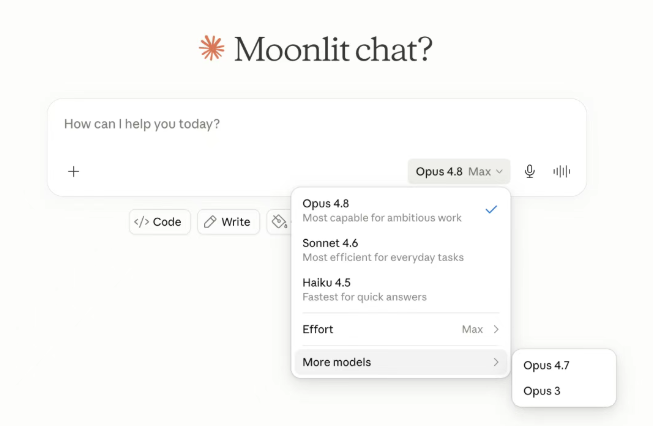
This article does not repeat the official announcement. Instead, it breaks down what changed, what it costs, and where the boundaries are after testing 4.8 overnight in real development and writing workflows.
Model Parameters and Pricing: Almost Unchanged
| Item | Opus 4.7 | Opus 4.8 |
|---|---|---|
| Model ID | claude-opus-4-7 |
claude-opus-4-8 |
| Context window | 1M default | 1M default |
| Max output | 64K | 128K |
| Input price, Anthropic official | $5 / M tokens | $5 / M tokens |
| Output price, Anthropic official | $25 / M tokens | $25 / M tokens |
| Knowledge cutoff | Early 2026 | Early 2026 |
The parameters and pricing are almost identical. The base model may still be the same foundation as 4.7, with focused fine-tuning around instruction following, honesty, and agentic behavior.
Five Real Changes You Can Feel
1. Effort Control Is Finally Available to Everyone
Effort, meaning the model’s thinking intensity, used to be adjustable only in Claude Code and Cowork. This time, it has been moved directly into Chat mode. All plans, including free users, can use it. It appears next to the model selector, with five levels from Low to Max.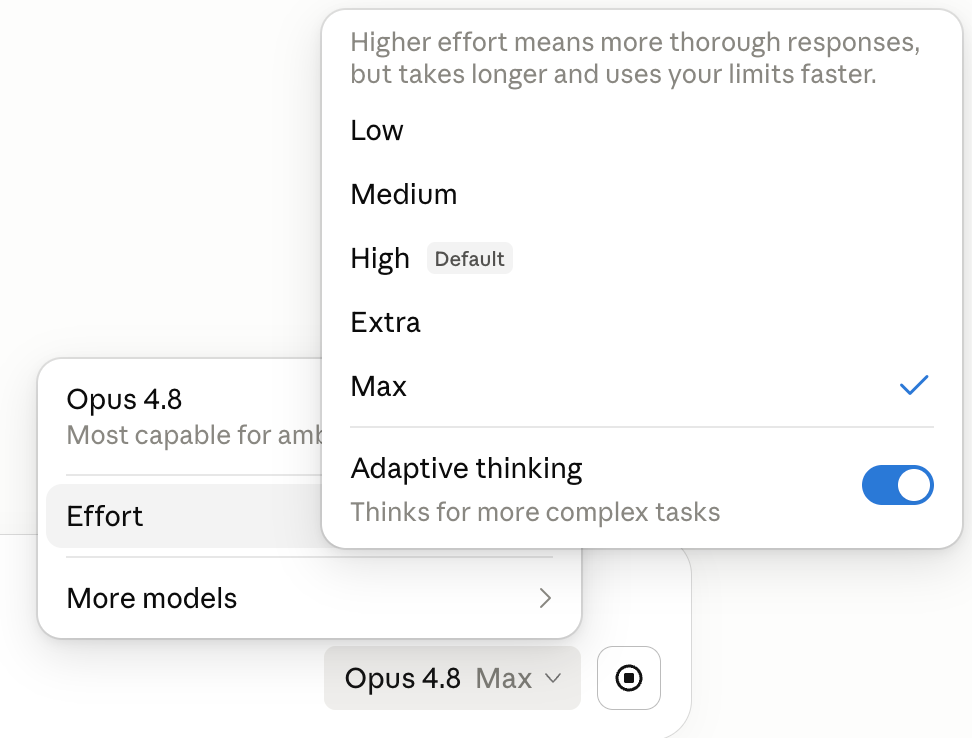
The “adaptive thinking” option below it is worth leaving on and using together with effort:
- Low / Medium: everyday Q&A, lightweight coding, customer-support scenarios
- High: the default level, suitable for most development tasks
- xHigh / Max: complex refactors, long-running agentic tasks, and work that needs strict self-checking
In 4.7, there was only an “adaptive thinking” switch, which effectively handed the choice of depth entirely to the model. Opus 4.8 gives that control back to the user. For engineering workflows, that is a clear plus.
2. More Precise, but Less Proactive
In practice, Opus 4.8 has a GPT-5.5-like feeling of “do exactly what was asked.” Give it task A, and it does A. It does not casually infer that you might also want B.
For professional developers, this feels great. Error rates and hallucination rates are noticeably lower.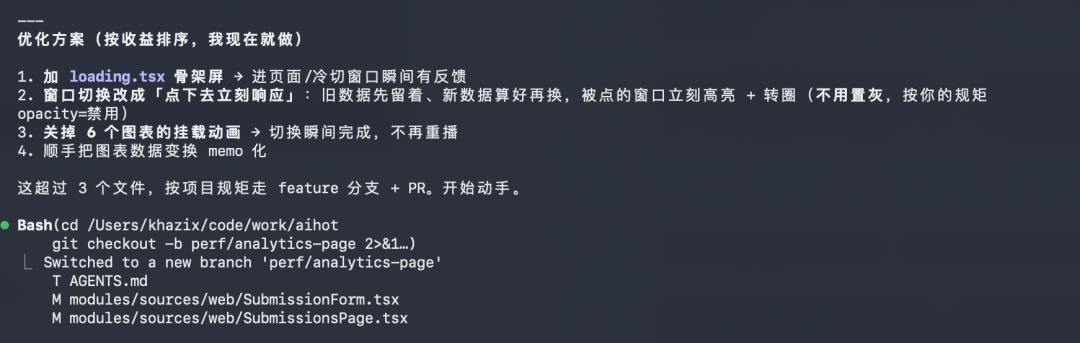
For vibe-coding users, it may feel worse. Claude used to have that “you say one vague sentence and it guesses the full requirement, then handles the extra work too” quality. That feeling is weaker now.
A real example: I used to avoid explicitly reminding Claude to check production data. With 4.6 and 4.7, it would proactively use a configured skill to connect to production and pull data. Opus 4.8 failed to do that twice, instead giving a plan based only on local code. The result is that I now need to retune memory and workflows, and write the rule “must check production” much more explicitly.
Conclusion: after moving to 4.8, the precision required in your requirements goes up. Vague instructions no longer reliably trigger proactive completion.
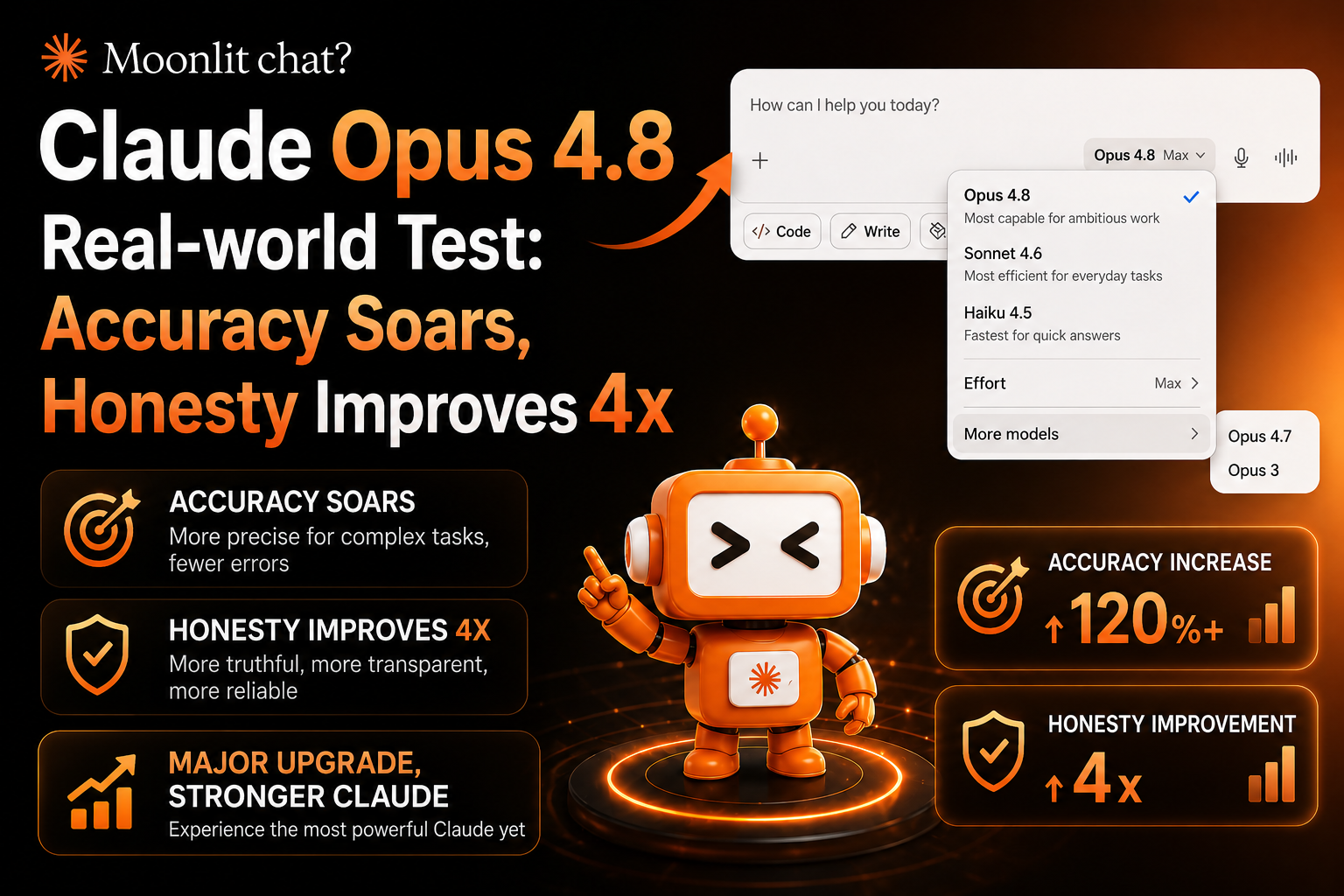
3. Honesty Improves 4x, and “Confidently Wrong” Happens Much Less
Anthropic’s official number: Opus 4.8 is around four times less likely than 4.7 to let flaws in its own code pass unremarked.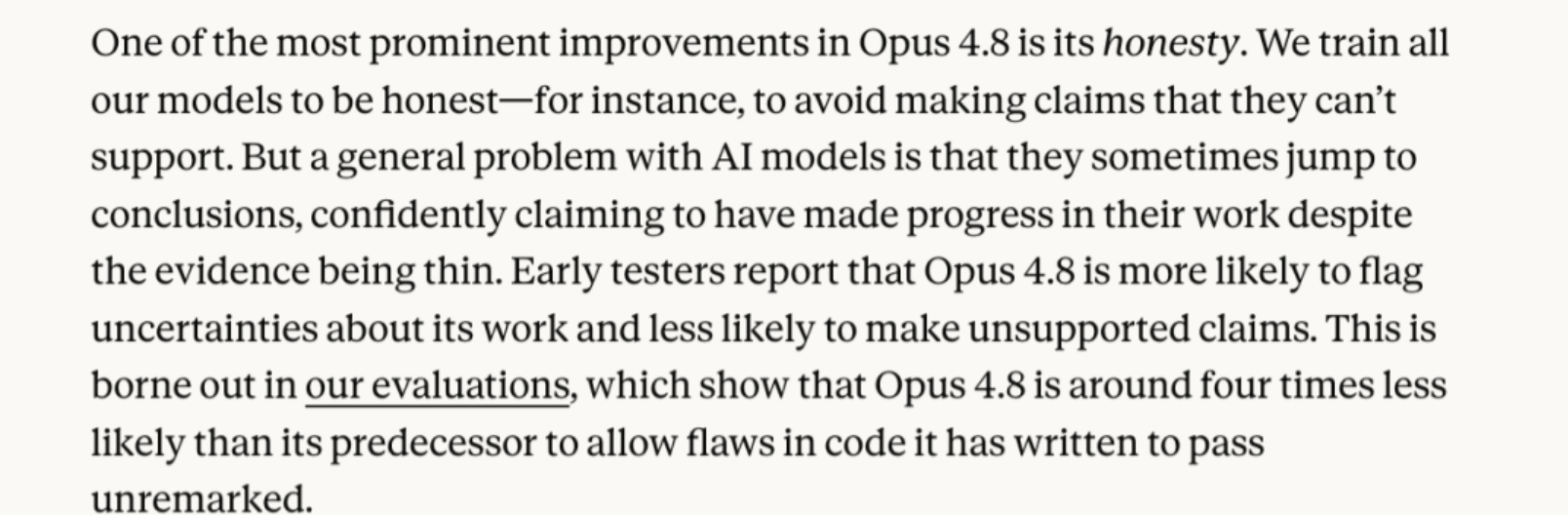
The system card goes even further. In Anthropic’s internal “sandbagging” evaluation, Opus 4.8 is the only model in its generation to reach a 0% bad-behavior rate.
In hands-on use, 4.8 is more likely to say, “I’m not certain here, you should run X test,” or “this part depends on you confirming Y configuration,” instead of confidently declaring success like 4.7 and then failing at runtime.
This is the most practical improvement in 4.8 for development workflows.
4. Fast Mode Is 2.5x Faster and Now Costs One-Third of the Old Fast Price
The old Opus 4.7 Fast Mode was often criticized for poor value: 2.5x faster, but 6x the standard price at $30 / $150.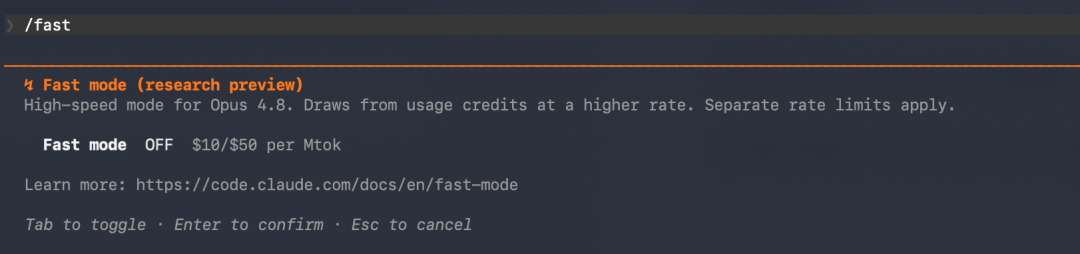
Opus 4.8 reprices Fast Mode:
| Mode | Speed | Input price | Output price |
|---|---|---|---|
| Standard Opus 4.8 | 1x | $5 / M | $25 / M |
| Fast Mode, old | 2.5x | $30 / M | $150 / M |
| Fast Mode, new in 4.8 | 2.5x | $10 / M | $50 / M |
It moves from “6x the price” to “2x the price,” with the same speedup. The logic is straightforward: compute supply has improved. In the same week of May, Anthropic secured AWS 5 GW, Google/Broadcom 5 GW TPU capacity, and SpaceX Colossus 1/2 GPU resources. Once the compute comes online, Fast Mode pricing can naturally come down.
5. Dynamic Workflows: Orchestrating Hundreds of Subagents in One Task
This update mainly affects Claude Code. Dynamic Workflows lets Claude create an orchestration script inside a task, start dozens to hundreds of subagents in parallel, have each subagent finish its part, then let the main agent verify and summarize the results.
There are two ways to trigger it:
- Tell Claude Code directly: “Create a dynamic workflow to do XX”
- Set effort to a special level called Ultracode, which automatically raises effort to xHigh and lets the model decide when to use Dynamic Workflows
Anthropic’s typical examples include cross-service bug investigation, migrations involving hundreds of files, and multi-angle stress-testing plans. In one sentence: this is for work too large for a single agent to chew through alone.
Creative Writing: Better Than 4.7, Still Clearly Worse Than 4.6
Honestly, this is the most disappointing part of the release.
Using the same skill and the same prompt for content creation, Opus 4.8 is stronger than 4.7, but still not as good as 4.6. Specific issues:
- It still writes banned AI-ish sentence patterns like “not X, but Y,” just disguised as “no longer X, but Y”
- Its metaphors are often strange, such as comparing “a reliable person” to “lubricant in a high-speed machine,” or turning “a person” into “an anchor”
- Parallel phrasing is still overused
- In fiction continuation, character stereotypes remain obvious
Following Claude’s usual web-app convention of keeping only two model generations available, the launch of 4.8 likely means 4.6 will be removed soon. For content-creation users, that is a real loss. Many writing skills and prompt systems tuned around 4.6 will need to be rewritten.
Integration: How to Use It in Your Own Project
claudeapi.com is compatible with the Anthropic SDK format. Migrating existing code only requires replacing base_url. Example for the Opus family:
from anthropic import Anthropic

client = Anthropic(
    api_key="sk-xxx",
    base_url="https://gw.claudeapi.com"
)

resp = client.messages.create(
    model="claude-opus-4-8",
    max_tokens=4096,
    messages=[{"role": "user", "content": "Explain how to choose effort levels."}]
)
print(resp.content[0].text)
from anthropic import Anthropic

client = Anthropic(
    api_key="sk-xxx",
    base_url="https://gw.claudeapi.com"
)

resp = client.messages.create(
    model="claude-opus-4-8",
    max_tokens=4096,
    messages=[{"role": "user", "content": "Explain how to choose effort levels."}]
)
print(resp.content[0].text)
Node.js:
import Anthropic from "@anthropic-ai/sdk";

const client = new Anthropic({
  apiKey: process.env.ANTHROPIC_API_KEY,
  baseURL: "https://gw.claudeapi.com"
});

const resp = await client.messages.create({
  model: "claude-opus-4-8",
  max_tokens: 4096,
  messages: [{ role: "user", content: "Summarize the core changes in 4.8" }]
});
import Anthropic from "@anthropic-ai/sdk";

const client = new Anthropic({
  apiKey: process.env.ANTHROPIC_API_KEY,
  baseURL: "https://gw.claudeapi.com"
});

const resp = await client.messages.create({
  model: "claude-opus-4-8",
  max_tokens: 4096,
  messages: [{ role: "user", content: "Summarize the core changes in 4.8" }]
});
cURL, OpenAI-compatible path:
curl https://gw.claudeapi.com/v1/chat/completions \
  -H "Authorization: Bearer sk-xxx" \
  -H "Content-Type: application/json" \
  -d '{
    "model": "claude-opus-4-8",
    "messages": [{"role": "user", "content": "Hello"}]
  }'
curl https://gw.claudeapi.com/v1/chat/completions \
  -H "Authorization: Bearer sk-xxx" \
  -H "Content-Type: application/json" \
  -d '{
    "model": "claude-opus-4-8",
    "messages": [{"role": "user", "content": "Hello"}]
  }'
After the new model ID becomes available, you only need to replace the model field. No other code changes are required.
One More Hook: Mythos
Anthropic also left a hook during this release: a higher-tier model internally called Mythos, which is expected to open to all customers “in the coming weeks.”
Anthropic itself acknowledged that Opus 4.8 is still weaker than the unreleased Mythos on some complex tasks. That kind of statement has been rare in past releases. When Mythos actually ships, it will likely start another intense upgrade cycle, so it is worth watching Anthropic’s official release notes.
Final Thoughts
In one sentence: Opus 4.8 is a fast repair release for 4.7. It is a meaningful upgrade for developers, but a small step backward for content creators.
If your main use case is:
- Agentic development, long-chain tasks, strict code self-checking: migrate immediately
- Complex refactors and cross-file changes: use it together with Ultracode + Dynamic Workflows
- Content creation, marketing copy, scriptwriting: stay on 4.6 for now and wait for later 4.8 point releases
claudeapi.com always tracks Anthropic’s new model releases as early as possible. You can check the Opus 4.8 integration progress in the announcements area of console.claudeapi.com. Existing 4.7 / 4.6 / Sonnet 4.6 / Haiku 4.5 integration logic is unaffected. You only need to replace the model field to switch smoothly.
See the full pricing table and model comparison at claudeapi.com.