Anthropic Completes $65B Series H Funding Round, Reaches $965B Post-Money Valuation and Surpasses OpenAI
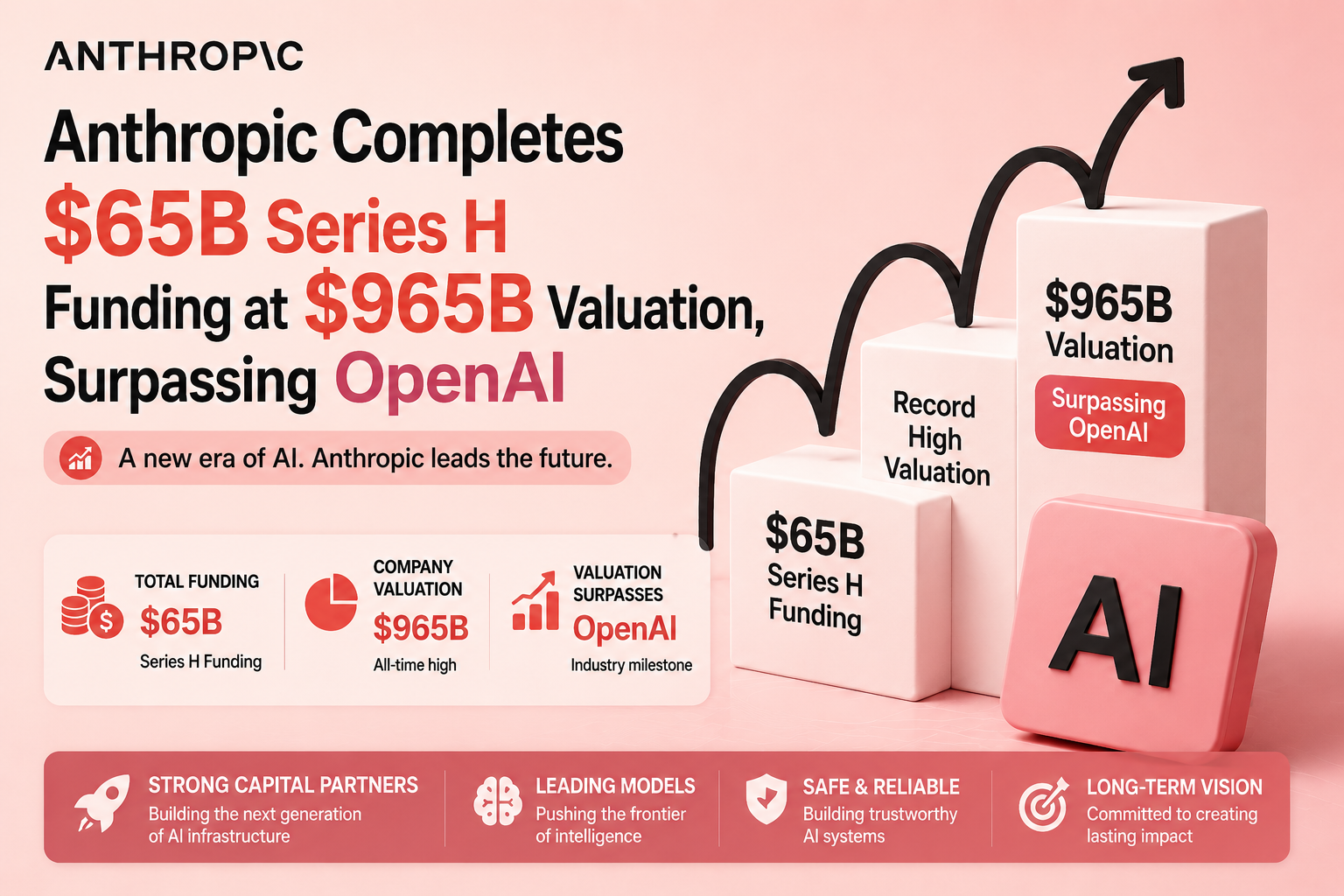
In the early hours of May 28, on the same day it released Opus 4.8, Anthropic announced the completion of a $65 billion Series H funding round, bringing its post-money valuation to $965 billion. That puts it ahead of OpenAI’s $852 billion valuation from March, officially making Anthropic the world’s highest-valued AI company.
Just three months earlier, in February, Anthropic’s previous valuation was $380 billion. Nearly tripling in valuation within a single quarter is rare even in the history of AI financing. This article breaks down the key details of the round, the forces behind it, and what it means in practice for developers.
Key Funding Numbers
| Item | Value |
|---|---|
| Funding round | Series H |
| Funding size | $65 billion |
| Post-money valuation | $965 billion, about RMB 7 trillion |
| Previous valuation, February 2026 | $380 billion, after raising $30 billion |
| Quarter-over-quarter valuation growth | About 2.5x |
| Current annualized revenue | More than $47 billion |
| Source | Anthropic’s official Series H announcement |
For comparison, OpenAI’s March valuation was $852 billion. Anthropic flipped the gap in one move, going from being behind OpenAI to exceeding it by $113 billion.
Investor Lineup: Financial and Strategic Capital Are Both Here
Lead investors: Altimeter, Dragoneer, Greenoaks, Sequoia
Financial investors: Blackstone, Fidelity, Temasek, General Catalyst
Strategic / chip supply chain investors: Samsung, Micron, SK hynix
The strategic investor lineup is one of the more important details in this round. Three of the world’s leading memory chip manufacturers joined at the same time, which suggests that Anthropic is directly tying compute supply chains into its shareholder structure. That matters for stable future access to HBM, training chips, and inference hardware.
Compute Deals Landed at the Same Time: 5 GW + 5 GW + SpaceX
Funding alone is not the real story. The real heavyweight signal is that several compute agreements were signed at the same time:
| Partner | Scale and content |
|---|---|
| AWS | Up to 5 GW of new compute capacity; Claude’s current primary cloud provider and training partner |
| Google + Broadcom | Up to 5 GW of next-generation TPU capacity |
| SpaceX | Access to Colossus 1 and Colossus 2 GPU clusters |
| All three major clouds covered | Claude is currently the only frontier model available across AWS, Google Cloud, and Azure |
What does 10 GW mean? It is roughly equivalent to the total power output of 8-10 large nuclear power plants. AI companies directly buying nation-scale energy capacity is the real backdrop of the 2026 competition.
This also explains why Fast Mode, released alongside Opus 4.8, can bring pricing down from $30/$150 to $10/$50. Once compute supply catches up, unit inference cost can come down.
$47B in Annualized Revenue Is the Real Support Behind the Valuation
Many people focus on the $965 billion valuation, but the number actually supporting that valuation is revenue:
- During the previous funding round in February: annualized revenue had not yet reached this scale
- During this round in May: annualized revenue had already passed $47 billion
- Quarterly year-over-year growth: extremely high, though Anthropic has not disclosed the exact multiple
Using the common AI-company valuation framework of “revenue / valuation ≈ 20x,” a $965 billion valuation on $47 billion in revenue implies a multiple of about 20.5x. That is within a reasonable range for a leading AI company and is not an obviously extreme overvaluation.
This is also why the round includes traditional, steady institutional investors such as Blackstone, Fidelity, and Temasek. They are looking at the revenue curve, not just the narrative.
Where the Money Goes: Two Main Tracks Stay the Same
Anthropic has consistently emphasized two investment priorities:
- Compute expansion: after the AWS + Google + SpaceX agreements land, capital expenditure is needed to activate those clusters
- Safety research: Anthropic continues to expand its alignment, red-team, and interpretability teams
These two tracks will not change in the short term. What this means for developers is that the Claude model release cadence is likely to get faster. Opus 4.7 to 4.8 took only 42 days, which is already a signal. At the same time, unit inference costs should continue to fall.
What This Means for Developers Using the Claude API
| Dimension | Short term, 3-6 months | Medium to long term |
|---|---|---|
| Model release cadence | Faster and faster; Mythos is already in the queue | Older model lifecycles may shorten |
| Inference pricing | Fast Mode has already dropped first; standard pricing may follow | Unit token costs continue to decline |
| Context window | 1M default context has become mainstream | May push further to 2M / 4M |
| Service stability | Multi-cloud and self-built cluster redundancy improve | Better disaster recovery during regional outages |
In one sentence: after this round resolves Anthropic’s compute and capital pressure in one move, the most direct developer-facing changes will be faster model iteration, lower prices, and higher stability.
Smoothly Integrating New Versions: Just Replace base_url
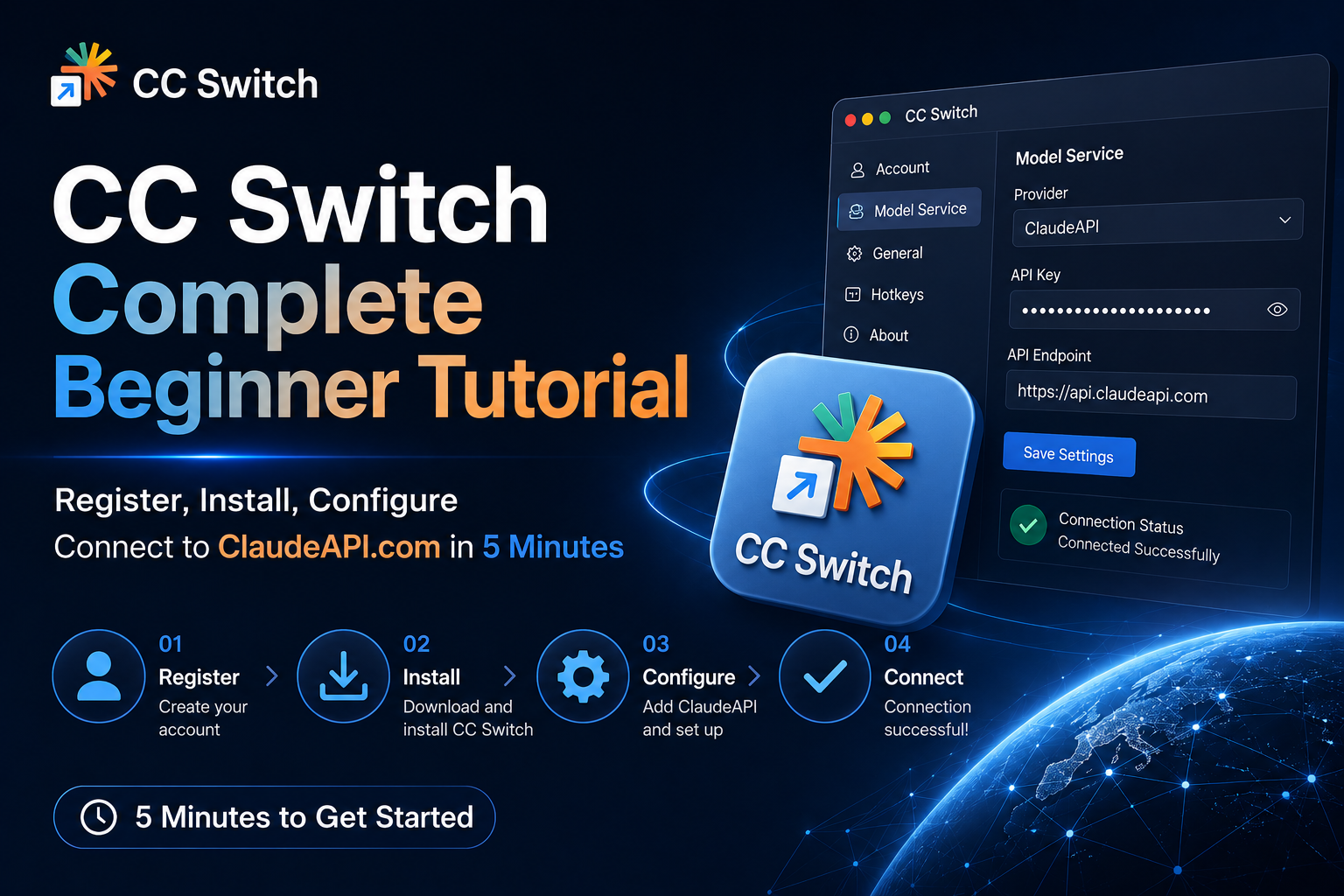
claudeapi.com is compatible with Anthropic’s native SDK format. Migrating existing code only requires replacing base_url:
from anthropic import Anthropic

client = Anthropic(
    api_key="sk-xxx",
    base_url="https://gw.claudeapi.com"
)

resp = client.messages.create(
    model="claude-opus-4-7",
    max_tokens=4096,
    messages=[{"role": "user", "content": "How large was Anthropic’s Series H funding round?"}]
)
from anthropic import Anthropic

client = Anthropic(
    api_key="sk-xxx",
    base_url="https://gw.claudeapi.com"
)

resp = client.messages.create(
    model="claude-opus-4-7",
    max_tokens=4096,
    messages=[{"role": "user", "content": "How large was Anthropic’s Series H funding round?"}]
)
Node.js:
import Anthropic from "@anthropic-ai/sdk";

const client = new Anthropic({
  apiKey: process.env.ANTHROPIC_API_KEY,
  baseURL: "https://gw.claudeapi.com"
});

const resp = await client.messages.create({
  model: "claude-sonnet-4-6",
  max_tokens: 1024,
  messages: [{ role: "user", content: "Hi" }]
});
import Anthropic from "@anthropic-ai/sdk";

const client = new Anthropic({
  apiKey: process.env.ANTHROPIC_API_KEY,
  baseURL: "https://gw.claudeapi.com"
});

const resp = await client.messages.create({
  model: "claude-sonnet-4-6",
  max_tokens: 1024,
  messages: [{ role: "user", content: "Hi" }]
});
After Opus 4.8, Mythos, and other new models become available, you only need to replace the model field. The rest of the code does not need to change. This is the lowest-friction way to keep up with Anthropic’s fast release cadence.
A Brief Industry Observation
After this funding round, the AI industry landscape looks clearer:
| Company | Latest valuation | Annualized revenue | Main battleground |
|---|---|---|---|
| Anthropic | $965B | $47B+ | Enterprise API + Claude Code |
| OpenAI | $852B, March data | $40B+ estimated | Consumer ChatGPT + enterprise API |
| xAI / SpaceX | Private | — | Models + compute supply |
Anthropic has already taken a material lead in two areas: enterprise ramp, meaning the speed at which companies are migrating from OpenAI, and agentic development capability. This valuation flip is the market pricing in that lead all at once.
The next windows to watch: Mythos in the coming weeks, Q3 earnings, and enterprise market share data.
claudeapi.com tracks Anthropic’s latest models and pricing changes as early as possible. It already supports the full lineup of Opus 4.7 / 4.6, Sonnet 4.6, and Haiku 4.5, with clear pricing, transparent usage, and enterprise billing support.
For the full model list and pricing table, see claudeapi.com. For Opus 4.8 integration progress, check the announcements section in the console: console.claudeapi.com.